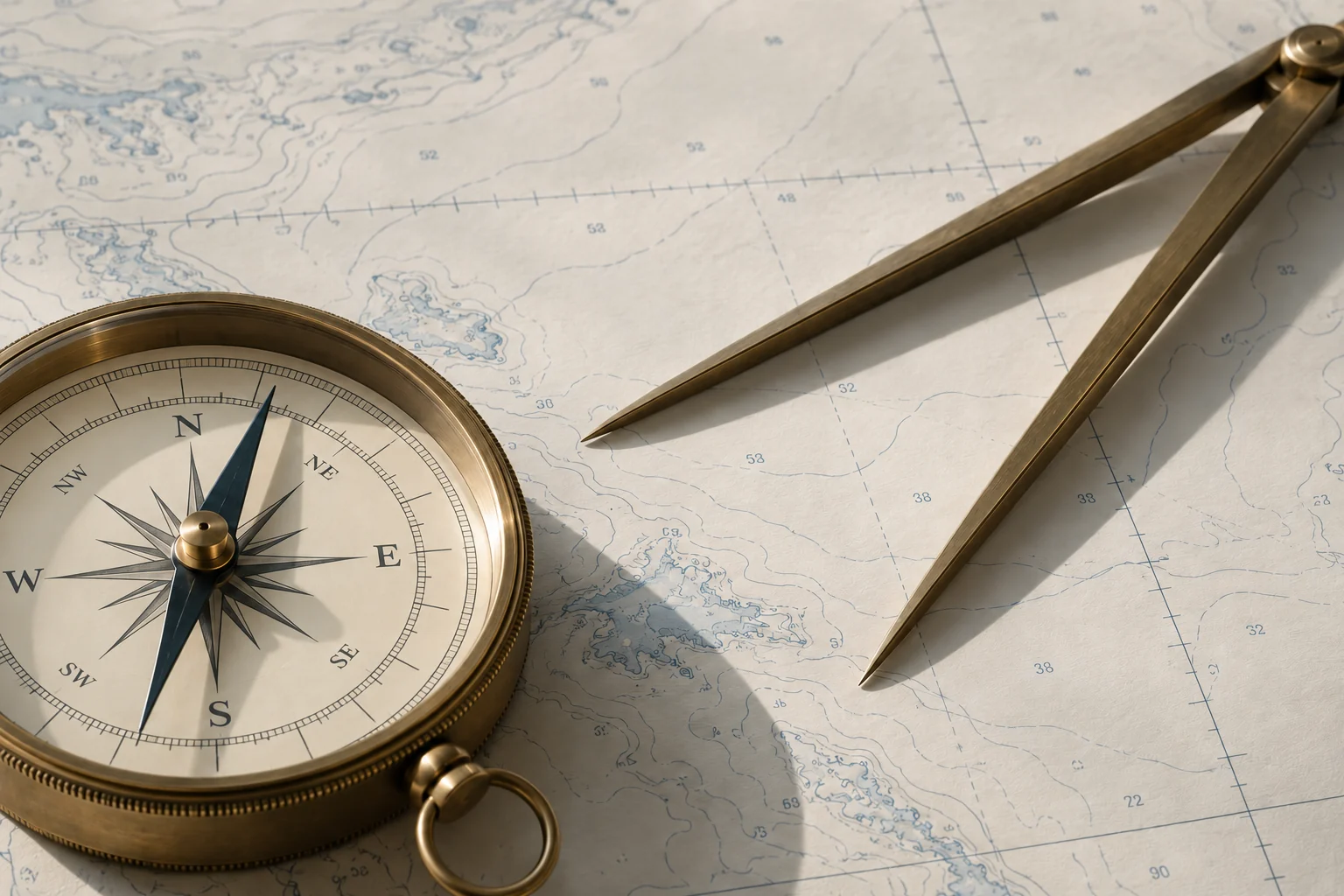
The compass widened the world people could navigate. The computer changed the scale at which they could calculate, create and organize. Each helped give rise to new kinds of work and new kinds of businesses. The invention was a beginning; its consequences took shape through what people built around it.
That gap between capability and instrument is easy to overlook, because the capability is the exciting part. It fills the headlines and the demonstrations. But a capability on its own does not tell anyone what to do on an ordinary Tuesday morning. It has no opinion about which task matters, what a good result looks like, or when a person should step in. An instrument does.
What an instrument adds
An instrument is a capability that has been given a purpose. It is shaped around a particular job, it fits into the way that job is already done, and it behaves consistently enough that people stop thinking about it and start thinking with it. A good instrument becomes part of someone’s judgement rather than a substitute for it.
Most of the work of making one is unglamorous. It is deciding what to leave out. It is noticing the step everyone skips, the check everyone does twice, the handoff where things quietly get lost. It is designing for the afternoon when the input is messy and the deadline is close, not only for the clean example.
Why this moment is different
Today’s models can read, write, summarise and take actions across software. That reaches into work tools have rarely touched: interpretation, drafting, coordination, the connective tissue between systems and the people who use them. The range of what can be attempted has widened faster than our shared sense of how any of it should be used.
So the opportunity is not only in the models. It is in the instruments built around them: products that take a general capability and commit it to a specific, valuable outcome, with the boundaries, feedback and trust that real work needs.
A model can reason, write and act. A useful product gives that capability a job to finish, a place in the workflow and a reason to be trusted.
What we look for
When we consider what to build, we start with the work rather than the technology. Where is effort being spent on something a person should not have to carry? Where does a capability that exists today change what a small team can take on? Where would a dependable tool be used every day, rather than tried once and forgotten?
Then we look for the shape of the instrument. What is its job, precisely? Where does it sit in the day? How does someone see what it did, correct it, and come to rely on it? Those questions take longer to answer than a prototype takes to build, and the answers are most of the product.
The tools and businesses of this era are still taking shape. The decisions made now will influence how people work for years to come. Voyage is built to take part in that work, through our own products and through the work we take on with other teams. Every new era needs its instruments. We intend to build ours.
An original essay by Voyage Studios.